
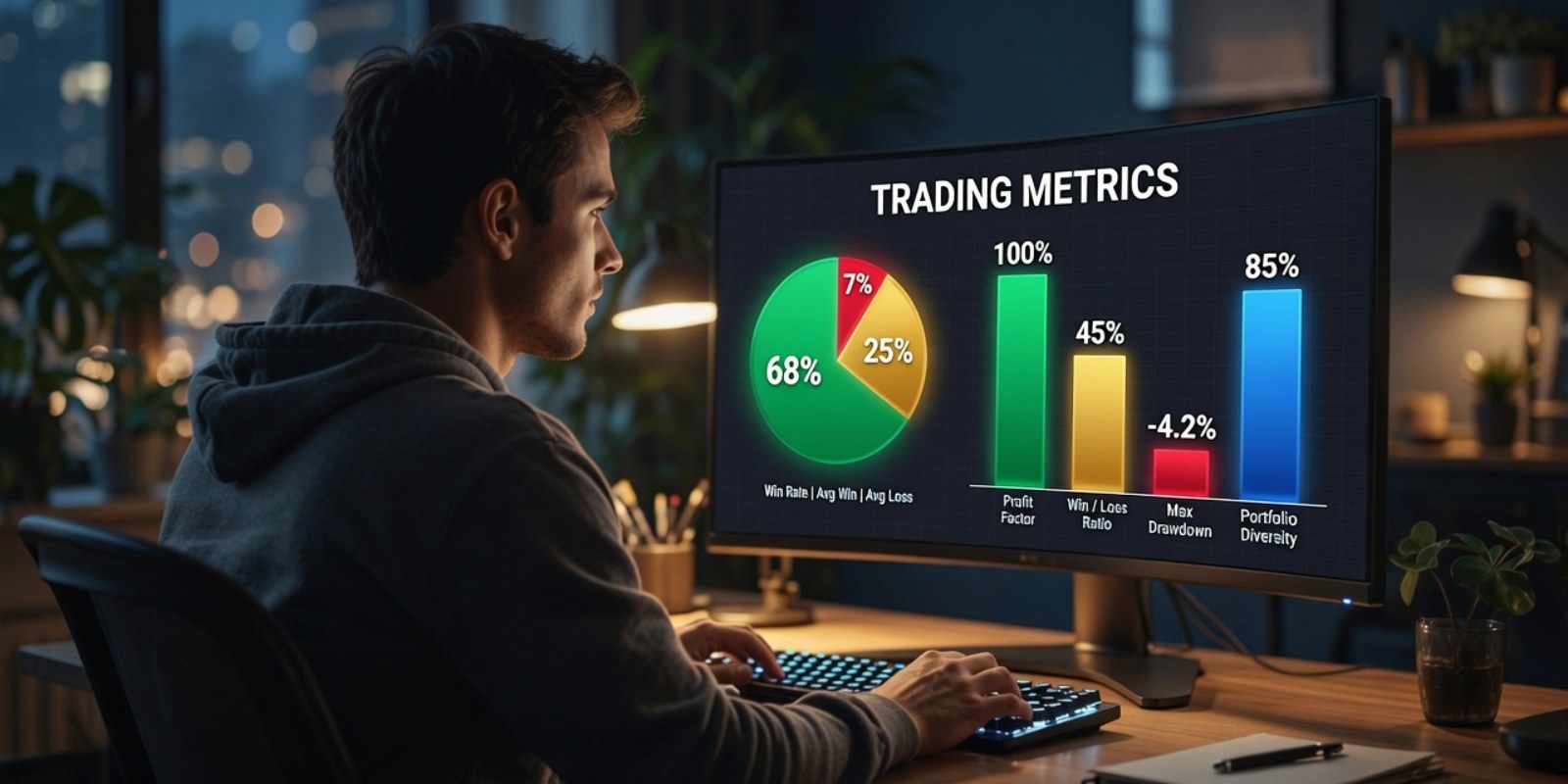
When I started trading, the only stat I kept was my P&L balance, and everything was judged on that one number. When it went down, I questioned everything: my stock selection, market conditions, the indicators I used, the timeframe I traded. It put me in a constant spiral of doubt and style drift, and consistency was impossible.
That all changed when I started keeping more stats.
From spreadsheet to system
I started on an Excel spreadsheet, but with the number of trades I place each week, entering everything by hand became very time consuming. I scoured the web and came across TradeZella, a purpose built, cloud based journaling program that syncs automatically with my IBKR accounts. Keeping my stats became automated, and I could finally spend my time analyzing instead of entering data. It saves me boatloads of time.
Having the ability to analyze my trades over time, with a holistic view of my performance, was the edge I needed to start trending toward consistency. It gave me the feedback to know where to make changes, and the changes were not indicators or timeframes. The data pinpointed specific areas I could work on and refine, so I could hone my strategies and become more profitable.
Being right is not the goal
The biggest revelation for me was realizing that being right is not the key to success in trading. In the past, getting stopped out and being wrong in my thesis worked me up so much that it created anxiety around future trades. Now I know being right does not matter. It is all about your strategy and your process. Stick to the process, and the math will do the rest.
When I looked at my win rate, I saw I was winning 30% or less of my trades and still profitable. Wow.
That told me my risk management is working, and it showed me other areas I can sharpen to become even better. I am not nearly where I need to be to trade at the level I want to trade, but keeping trading stats and having a thorough review process has put me on the consistency path.
The stats I review every month
- Net realized P&L: the percentage profit or loss I made for the period
- Number of trades: how many trades I took that period
- Win %: trades won as a percentage of total trades placed
- Average win/loss: the ratio of my average gain per trade to my average loss per trade. If my average gain is 25% and my average loss is 5%, the ratio is 5
- Average gain: average gain per winning trade, as a percentage
- Average loss: average loss per losing trade, as a percentage
- Profit factor: total profits divided by total losses. Anything above 1 means the strategy is profitable overall
- Max drawdown: how far my equity curve is down from its peak
- Average hold time, winners: how long I hold my winning trades. Not holding winners long enough has cost me a lot of potential profit, so keeping this number high helps me stay in the runners longer
- Average hold time, losers: how long I hold my losing trades. Cutting losers faster is critical to managing risk, and tracking this helped me overcome the psychological trap of trading on hope
- Average hold time, scratches: how long I hold trades that end roughly flat
- Zella Score: a proprietary rating from TradeZella that grades your trading on win %, profit factor, average win/loss, recovery factor, max drawdown, and consistency. The higher the number, the better you traded overall on those metrics
My throttle
Looking at these numbers consistently has become the feedback that tells me how to throttle. When the numbers are improving, my rules allow me to take on more risk. As soon as they start declining, I know it is time to slow down and reassess. For me, the most important thing is not maximizing profit. It is minimizing losses. I want to make sure I stay in the game for as long as possible.
Head over to X and let me know how keeping trading stats has helped you become a better trader.
If you are interested in taking a look at TradeZella, you are welcome to use my referral link. In full transparency: TradeZella is a paid tool with a monthly subscription, and the referral link does not change the price you pay either way. I share it because it is the tool I genuinely use every day.
This post is general education, not financial advice. Investing involves risk, including possible loss of principal.